1. Quick Summary
Within a fraction of a second of seeing a face we form impressions of traits like warmth and competence. These snap judgements are rough, automatic and made long before we decide to.
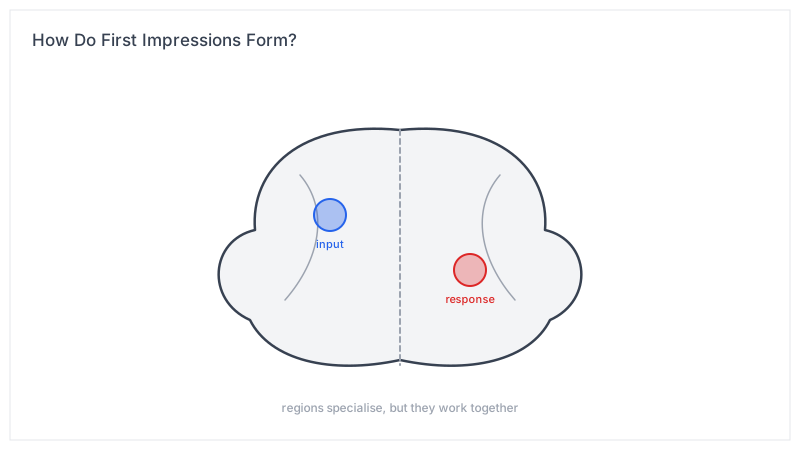
They are useful shortcuts, not verdicts. The brain evolved to size up people fast for safety and cooperation, but the first read is built from thin, easily misleading information.
2. What It Means
Two dimensions dominate early judgement. Social psychology finds people quickly sort others on warmth, whether they mean well, and competence, whether they can act on it.
Facial cues do much of the work. Expressions, and even stable features read as trustworthy or dominant, shape perception before a word is spoken, which is why first impressions feel instant.
Voice and posture add layers. Tone, stance and dress each feed the same fast assessment, so the impression is multimedia even in a brief encounter.
3. Why It Happens
Speed was adaptive. Quickly judging whether a stranger is friendly or threatening helped ancestors survive, so the brain prioritises a fast read over a slow, careful one.
Confirmation then locks it in. Once we form a view we notice evidence that fits and discount evidence that does not, which is why first impressions resist revision.
Culture tunes the details but not the speed. The tendency to judge fast is near-universal; what counts as warm or competent varies, so the same face can read differently across settings.
We apply it to ourselves too. Knowing we are being sized up changes how we present, and that awareness can itself become part of the impression we project.
4. Real Examples
Job interviews begin forming impressions before the first answer, which is why appearance, punctuality and a calm greeting shape the room before competence is demonstrated.
A competent but stern person is often read as less warm, and that single slip in the warmth dimension can outweigh real skill in how likable they seem.
Online, with no face or voice, first impressions form from a username, avatar and first line of text, showing the brain grabs whatever cues it can.
5. How It Affects Us
Because impressions stick, the opening moments of any encounter carry outsized weight. Spending them well is a real, repeatable advantage in work and life.
The flip side is bias. Snap reads embed assumptions about age, gender and ethnicity that have nothing to do with the individual, so awareness is the main correction.
They can be updated, just slowly. Consistent contrary evidence does shift a first impression, but it takes more repetitions than people expect.
6. Key Takeaways
- We form trait impressions of strangers within seconds from face, voice and posture.
- Warmth and competence are the two dimensions the brain scores first.
- Fast judgement was adaptive but leaves impressions sticky and bias-prone.
- Conscious awareness is the main tool for correcting a misleading first read.