1. Quick Summary
Green leaves look green because chlorophyll dominates everything else in them. That pigment is expensive to maintain, so as daylight shortens trees dismantle it and withdraw the useful nutrients back into branches and roots.
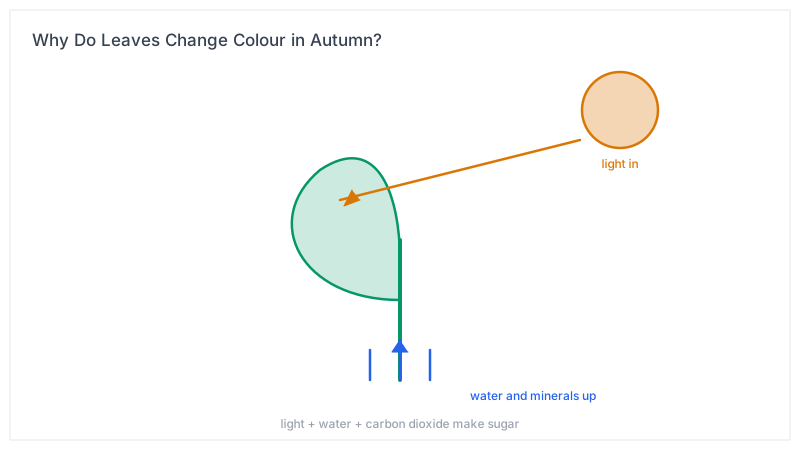
Once chlorophyll is gone, the yellows and oranges underneath become visible. The brilliant reds and purples are a separate story: those pigments are manufactured in the leaf during those same autumn weeks.
2. What It Means
Chlorophyll absorbs red and blue light to drive photosynthesis and reflects green, which is why unshaded summer foliage reads as green even though other pigments are present alongside it.
Carotenoids sit in the leaf all season doing light-harvesting work in the background. They are chemically steadier than chlorophyll and simply remain visible once the green pigment is removed.
Anthocyanins, the reds and purples, are not revealed but produced. Their synthesis needs sugars trapped in the leaf, which is why the reddest displays follow bright, cool spells that leave plenty of sugar behind.
3. Why It Happens
Day length is the reliable signal rather than temperature. A warm October will not delay the process much, because trees respond to the steady shortening of nights, which no weather fluctuation can fake.
Where the leaf joins the twig, a layer of cells called the abscission layer develops and gradually seals the connection. Nutrients move out over that period, which is why timing matters to the tree’s economy.
Anthocyanin production appears to serve the tree rather than the leaf. One line of evidence suggests it shields the still-working leaf from strong autumn sunlight while nutrients are being recovered, letting the withdrawal finish cleanly.
Different species differ sharply, which is why a hillside can be patchy. Maples and sumacs build anthocyanins and go red; birches and many beeches rely on carotenoids and turn yellow or copper.
4. Real Examples
Sugar maples can vary enormously from tree to tree. Two neighbours of the same species may turn in different weeks, because genetics set how readily each individual produces anthocyanins.
An early hard frost can cut a display short. Damaged cells stop the orderly process and leaves brown and drop rather than passing through the usual sequence.
In the southern hemisphere the same mechanism runs on the same schedule relative to the sun, producing autumn colour around March and April rather than October.
5. How It Affects Us
Autumn colour is a sign of preparation, not of damage. The tree is recycling nitrogen and phosphorus that would otherwise be lost with the leaf.
Fallen leaves matter long after they drop. They shelter overwintering insects, feed soil organisms and return nutrients slowly, which is why clearing every last leaf changes what the soil supports.
Warming climate has been shifting the timing later in many regions. Some evidence suggests the cue mismatch between day length and temperature makes displays less reliable year to year.
6. Key Takeaways
- Shortening days, not cold weather, trigger the change.
- Yellows and oranges are revealed as chlorophyll is withdrawn; reds are made freshly in autumn.
- Bright cool weather with plenty of leaf sugar produces the most intense reds.
- The tree is recovering nutrients, so autumn colour is preparation for winter rather than decay.