1. Quick Summary
Procrastination is the act of delaying a planned task even though you expect to be worse off for it. Almost everyone does it, and it is not the same as being lazy.
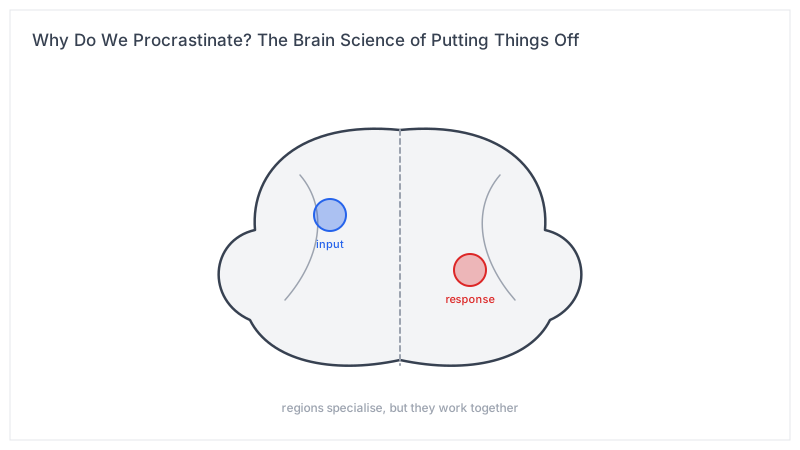
Brain imaging shows the decision to start a task involves a tug-of-war between the limbic system, which seeks immediate comfort, and the prefrontal cortex, which plans ahead.
When a task feels unpleasant or vague, the brain’s do-it-later option wins because it removes discomfort now, even at a future cost.
2. What It Means
The limbic system reacts to the unpleasant feelings a task brings, like anxiety or boredom, and pushes for relief. The prefrontal cortex is the part that weighs long-term goals.
Procrastination is effectively a self-control failure in the moment, not a character flaw. The task itself often feels more aversive than the eventual consequence.
3. Why It Happens
Abstract, far-off rewards are discounted by the brain. A deadline next week feels less real than the comfort of doing nothing right now, a tendency researchers call temporal discounting.
Unclear steps make a task feel bigger and more threatening, which raises the urge to avoid it. A clear, tiny first step lowers that threat.
Stress and low energy shrink the prefrontal cortex’s ability to override the limbic impulse, so we procrastinate more when tired or anxious.
4. Real Examples
A student keeps checking social media instead of starting a paper, not because the paper is impossible but because the blank page feels stressful and the phone feels safe.
Someone avoids a difficult email for days, then writes it in ten minutes once they break it into open draft, write one line, send.
After a poor night’s sleep, the same person who usually starts work promptly suddenly puts it off, because fatigue weakened the planning side of the brain.
5. How It Affects Us
Chronic procrastination is linked to higher stress, worse sleep, and lower wellbeing, because the task looms longer and the rush at the end is unpleasant.
It can become a loop: avoiding the task reduces short-term stress but increases long-term stress, reinforcing the habit.
On the upside, understanding the mechanism turns I’m lazy into my brain needs a smaller first step, which is fixable.
6. Key Takeaways
- Procrastination is an emotion-regulation problem, not a laziness problem.
- The brain trades a future reward for relief now, especially when a task feels vague or unpleasant.
- Shrinking the first step and resting well makes starting easier.