1. Quick Summary
Laughter is a vocal and physical reaction, often to something unexpected or pleasing, that people rarely do alone.
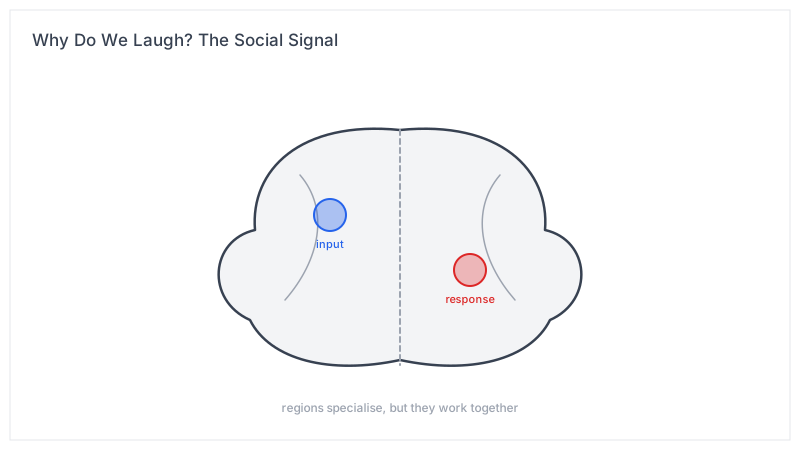
It is mostly social: we laugh far more with others than at jokes by ourselves, which points to its role in bonding.
It signals that a moment is safe and shared, easing stress and drawing people closer.
2. What It Means
A joke works by setting up an expectation and breaking it, and the surprise plus relief is what the laugh releases.
The brain’s reward and social centers light up during laughter, which is why it feels good and pulls us back to the group.
3. Why It Happens
Bonding: shared laughter builds trust and marks allies, a tool our ancestors may have used to keep groups together.
Signal of safety: a laugh tells others this is play, not threat, which is why roughhousing stays friendly.
Tension release: the exhale and rhythm can lower stress chemicals, a built-in pressure valve for the body.
4. Real Examples
People laugh more in a group than alone, even at the same clip, showing laughter is caught, not just caused.
Apes show a play panting that looks like a laugh, hinting the behavior is old and social, not only human.
Nervous laughter at a tense moment is the release valve firing when words fail.
5. How It Affects Us
Laughter smooths social life, easing conflict and marking friends, which helps teams and families function.
It briefly lifts mood and may ease pain and stress, a small free health boost.
Used kindly it connects; used at others’ expense it can wound, so the same act cuts both ways.
6. Key Takeaways
- Laughter is mainly a social signal of safety and shared feeling, not just a response to jokes.
- It bonds groups, eases tension, and rewards connection in the brain.
- Its effect depends on context: it can unite or, if cruel, divide.