1. Quick Summary
Static electricity is an imbalance of electric charge that stays put on an object until it jumps or leaks away.
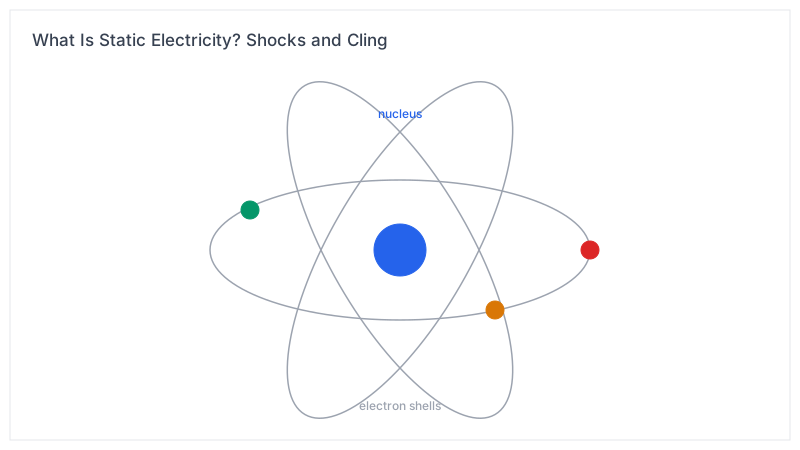
It builds when rubbing shuffles electrons, the tiny charged particles, from one surface to another.
The result can cling, like a balloon to a wall, or snap, like a shock from a doorknob.
2. What It Means
Objects normally have equal plus and minus charge; rubbing can leave one with extra electrons, giving it a negative static charge.
Opposite charges attract, so a charged balloon pulls neutral hair toward it, while same charges push apart.
3. Why It Happens
Dry air lets charge sit because moisture normally helps it drain; that is why static shocks are worse in winter heating.
Different materials hold electrons more tightly, so some steal them easily during contact while others give them up.
The snap you feel is the charge equalizing in a fast spark when your finger nears a conductor, like metal or another person.
4. Real Examples
Rubbing a balloon on hair makes it stick to a wall, a small static cling you can see and feel.
A wool sweater pulled off in the dark can crackle with tiny sparks as trapped charge releases.
Lightning is static electricity on a huge scale, as clouds and ground trade a giant charge.
5. How It Affects Us
Static is a nuisance that clings laundry and zaps fingers, but it is also used to paint cars and clean air.
In electronics, a stray spark can damage delicate parts, so workers ground themselves to bleed charge safely.
Knowing the dry-air link helps you avoid shocks by adding moisture or touching metal first.
6. Key Takeaways
- Static electricity is a trapped charge imbalance made by rubbing electrons loose.
- Dry conditions let it build, and opposite charges attract while like charges repel.
- It ranges from clingy balloons to dangerous sparks, including lightning at scale.