1. Quick Summary
A virus is a microscopic particle made of genetic material wrapped in a protein shell. On its own it does nothing; it needs a host cell to make copies.
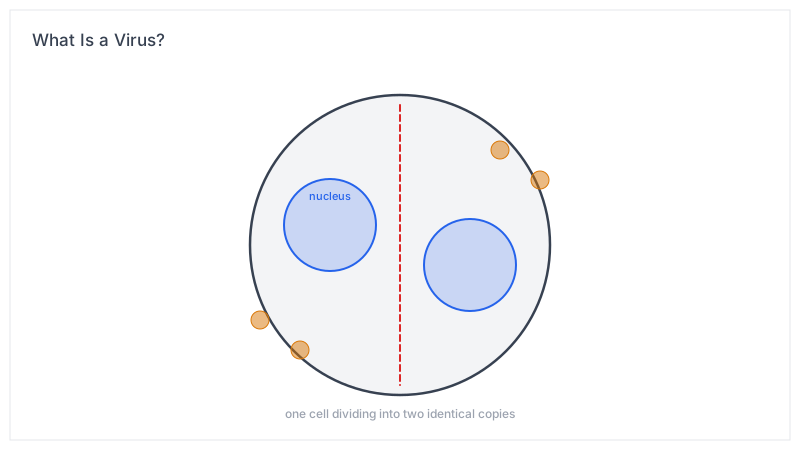
Once inside a suitable cell, it forces the cell to build more viruses, which then spread to new cells.
2. What It Means
Think of a virus as a set of copied-and-pasted instructions with no factory of its own. It borrows yours.
Because it cannot reproduce alone, scientists debate whether viruses count as truly ‘alive’.
3. Why It Happens
Viruses evolve to recognize and bind to specific receptors on certain cells, which is why some affect only plants, animals, or even bacteria.
Our immune system learns to recognize viral shapes and attacks infected cells; vaccines prepare that recognition in advance.
4. Real Examples
A cold virus infects cells in your nose and throat, causing them to pump out copies that spread when you sneeze.
Bacteriophages are viruses that infect bacteria and are being studied as alternatives to antibiotics.
5. How It Affects Us
Viruses cause many common illnesses, but also shape ecosystems and even help move genes between species.
Good hygiene, vaccines, and limited contact during outbreaks reduce how far they spread.
6. Key Takeaways
- A virus is genetic instructions in a shell that reproduces only by taking over a host cell.
- It sits in a gray zone between living and non-living, and our immune system (or vaccines) is the main defense.