1. Quick Summary
The heart is a fist-sized muscle that beats roughly 100,000 times a day to keep blood moving through your body.
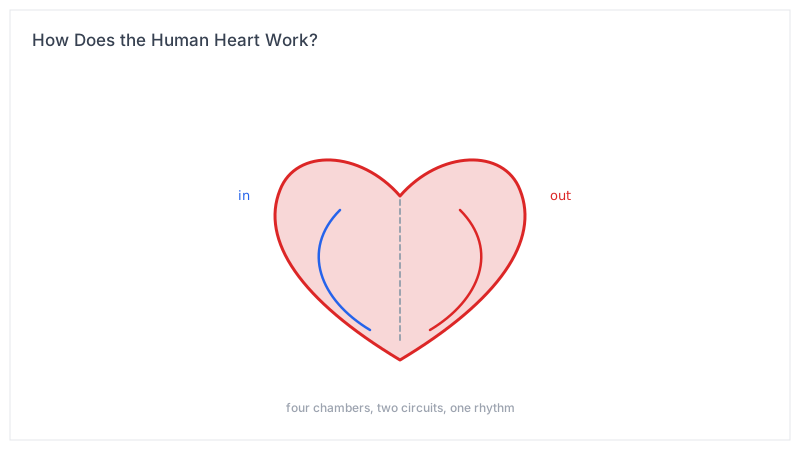
It has four chambers: two collect blood returning from the body and lungs, and two push it back out.
Blood picks up oxygen in the lungs and drops it off everywhere else, then returns to be refreshed again in a loop.
2. What It Means
The right side of the heart sends blood to the lungs to grab oxygen, and the left side sends oxygen-rich blood out to the whole body, two loops working as one pump.
Valves open and close to keep blood flowing forward, making the lub-dub sound you hear through a stethoscope.
3. Why It Happens
Oxygen is the fuel cells burn for energy, so a constant supply is vital; the heart’s rhythm exists to refresh that supply without pause.
The heartbeat is set by an internal pacemaker, a cluster of cells that fires electrical signals telling the muscle when to squeeze.
Exercise trains the heart to pump more with each beat, which is why fit people often have a lower resting rate.
4. Real Examples
When you run, your heart speeds up to deliver more oxygen to working muscles, then slows as you recover.
A blocked vessel can starve part of the heart of blood, which is a heart attack, showing why the supply line matters.
Defibrillators restart a chaotic rhythm by sending a controlled shock, echoing the heart’s own electrical control.
5. How It Affects Us
A healthy heart sustains every organ, so its condition shapes your energy, focus, and longevity.
Habits like movement, balanced food, and not smoking protect the vessels that feed the heart itself.
Knowing how it works turns vague health advice into a clear reason to care for the pump that never rests.
6. Key Takeaways
- The heart is a four-chamber pump that circulates oxygen-rich blood to the body.
- Valves and an internal pacemaker keep the flow one-way and steady.
- Protecting it through daily habits pays off across every organ it serves.