1. Quick Summary
Memory is the brain’s system for holding information over time, from a phone number to a childhood birthday.
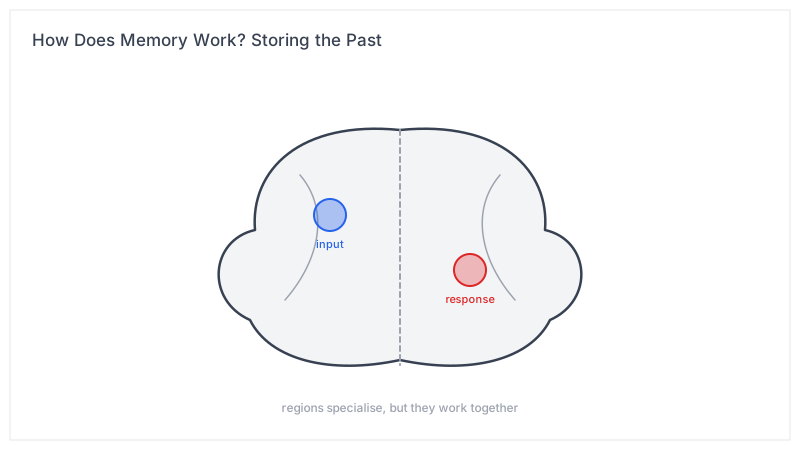
It works in three steps: taking in a moment, keeping it, and bringing it back when needed.
Not everything is saved, and what is saved can fade or bend, which is why two people recall an event differently.
2. What It Means
Encoding is turning an experience into a brain signal; storage is keeping that pattern; retrieval is finding it again, like saving, filing, and opening a file.
Short-term memory holds a little for seconds, while long-term memory can last years, and sleep helps move items from one to the other.
3. Why It Happens
The hippocampus acts like a librarian, labeling new experiences so they can later be filed across the cortex for long-term keeping.
Repetition and meaning strengthen links, which is why you remember a story better than a random list of words.
Emotion tags memories as important, so frightening or joyful moments stick more than dull ones, a useful survival shortcut.
4. Real Examples
Studying in chunks with breaks beats cramming, because the brain needs time to consolidate what it learned.
Smells can unlock a vivid scene from years ago, showing how memories are tied to many senses at once.
Eyewitness recall can shift after hearing others’ versions, revealing memory as reconstructive, not a perfect recording.
5. How It Affects Us
Memory is the backbone of learning, identity, and skill, letting today build on yesterday.
Forgetting is normal and even helpful, clearing clutter so key facts stand out.
Simple habits like sleep, attention, and review protect memory as life gets busy.
6. Key Takeaways
- Memory encodes, stores, and retrieves information through a network of brain regions.
- Sleep and repetition strengthen the move from short-term to long-term keeping.
- Recall rebuilds a past moment and can be shaped by later experience, not just replayed.