1. Quick Summary
A mirror shows you a reflection because its surface bounces light back instead of scattering it.
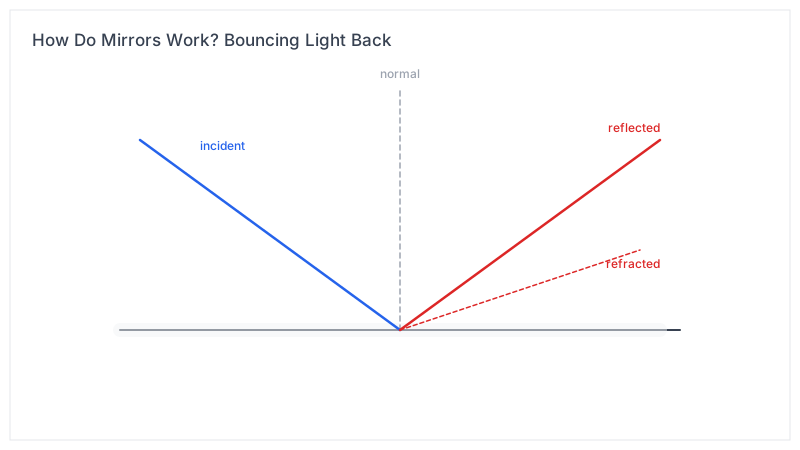
When light hits a very smooth surface, it returns at the same angle it arrived, rebuilding the scene in reverse.
That returned light forms the image your eyes read as a copy of what stands in front of the glass.
2. What It Means
Reflection follows a simple rule: the angle in equals the angle out, measured from the surface, which is why the image lines up with the object.
A mirror reverses left and right, not top and bottom, because it flips the view along the axis pointing into the glass.
3. Why It Happens
Smoothness is the key: a rough wall scatters light in many directions, while a mirror’s even surface sends it back as one clear beam.
A thin silver or aluminum backing does the reflecting, and clear glass simply protects it and lets light through to reach it.
The image sits behind the glass at the same distance you stand in front, an illusion of depth your brain accepts.
4. Real Examples
A still lake mirrors mountains because the water’s surface is smooth enough to reflect like glass.
A funhouse mirror is curved on purpose, so the angles bend and stretch the image into a joke.
A scratched or foggy mirror scatters light and blurs, proving how much the smooth surface matters.
5. How It Affects Us
Mirrors let us see ourselves, aiding grooming, safety, and devices from telescopes to lasers.
They also reveal how light behaves, a daily demo of a basic physics rule.
Their simple trick underpins tools far beyond the bathroom, from cameras to solar concentrators.
6. Key Takeaways
- A mirror reflects light at equal angles from a smooth surface, forming a reversed image.
- The metal backing does the bouncing while glass protects it.
- Roughness scatters light and kills the clear reflection, so smoothness is everything.