1. Quick Summary
A compass is a small magnet balanced so it can spin freely and settle along Earth’s magnetic field.
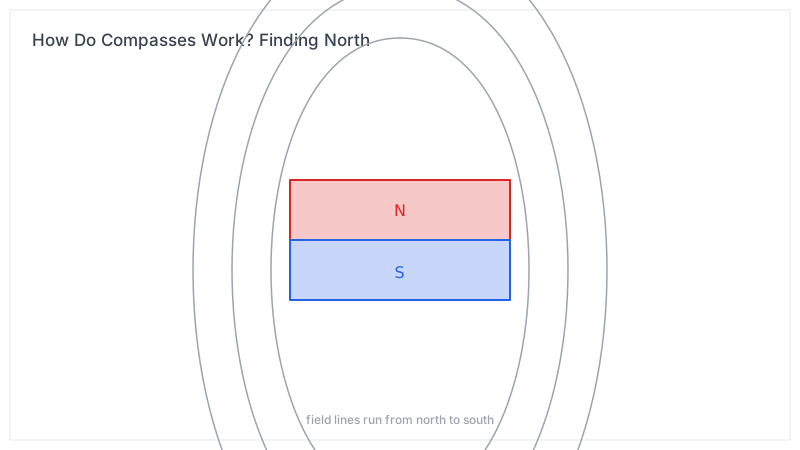
Because Earth behaves like a giant magnet, the compass needle’s north end swings toward the planet’s magnetic north.
That steady pointing has guided travelers for centuries, long before satellites existed.
2. What It Means
The needle is a magnet with a marked north pole that is pulled to align with the surrounding field, like iron filings near a bar magnet.
Floating or pivoting the needle removes friction so it can turn until the pull is balanced and it points true to the field.
3. Why It Happens
Earth’s core of moving metal generates a magnetic field that reaches the surface, giving the needle a direction to follow.
Magnetic north is near but not exactly at geographic north, a gap called declination that careful navigators correct for.
No power is needed, which is why a compass still works when batteries and signals fail.
4. Real Examples
Hikers pair a compass with a map to trace a route when phone navigation is dead.
A ship’s compass helped explorers cross oceans by holding a consistent heading through featureless water.
Near a magnet or steel, a compass veers, a useful warning that local metal can fool it.
5. How It Affects Us
Compasses made long-distance travel safer by giving a constant reference direction.
They remain a backup tool because they need no energy and few moving parts to fail.
Understanding them explains why the same field also guides migratory animals.
6. Key Takeaways
- A compass is a free-spinning magnet that aligns with Earth’s magnetic field.
- Its north end points toward magnetic north, near but not exactly geographic north.
- It needs no power, so it still works when electronics do not.