1. Quick Summary
A camera captures light through a lens, which bends the rays to form a sharp picture on a sensor (or film) behind it.
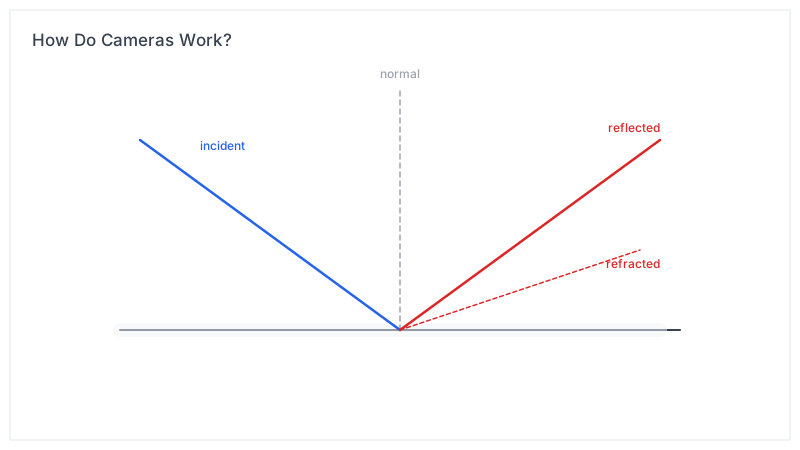
The shutter controls how long light hits the sensor; the lens opening (aperture) controls how much light passes.
2. What It Means
Think of a camera as a dark room with a tiny window. Open the window briefly and an image paints itself on the back wall.
Modern phones do this with a chip instead of film, then turn the light pattern into a digital photo.
3. Why It Happens
A lens is shaped so that light from each point in the scene meets at one point on the sensor, recreating the scene in focus.
The sensor is a grid of tiny light-sensitive spots (pixels) that record brightness and color.
Holding the camera still and timing the shutter avoids a blurry image from movement during the exposure.
4. Real Examples
A phone camera uses a tiny lens and sensor but the same focusing idea as a large professional camera.
Night photos need a longer exposure or brighter light because less light reaches the sensor in the dark.
5. How It Affects Us
Cameras let us record history, science, art, and everyday life, and share what we see instantly.
They turned photography from a rare skill into something billions carry in their pockets.
6. Key Takeaways
- A camera focuses light through a lens onto a sensor, with shutter and aperture controlling exposure.
- It is essentially a light-tight box that freezes a moment as a pattern of pixels.