1. Quick Summary
Rain forms when the sun evaporates water, the vapor rises and cools, condenses into cloud droplets, and those droplets merge until they fall.
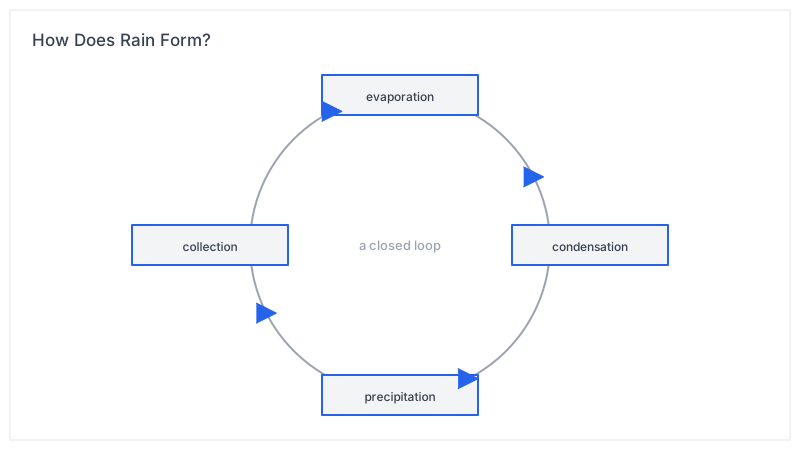
It is one visible step in the larger water cycle that moves water between ocean, air, and land.
2. What It Means
Clouds are not made of fluffy solid stuff; they are countless tiny water droplets or ice crystals hanging in the air.
Rain happens when those droplets get big and heavy enough that the air can no longer hold them up.
3. Why It Happens
Warm air holds more water vapor than cold air. When moist air rises and cools, the vapor condenses onto dust particles into droplets.
Inside a cloud, droplets collide and merge. Once a drop is about 100 times heavier than a typical cloud droplet, gravity wins and it falls as rain.
4. Real Examples
After a hot day by the sea, warm moist air rises, forms towering clouds, and often brings afternoon showers.
Mountains force air upward, cooling it and wringing out rain on the windward side — a pattern seen worldwide.
5. How It Affects Us
Rain fills rivers, lakes, and groundwater that supply drinking water, farming, and ecosystems.
Too little brings drought; too much brings floods — both shaped by where and when rain falls.
6. Key Takeaways
- Rain is condensed water vapor that grows too heavy to stay airborne in a cloud.
- It is a key part of the water cycle linking ocean, atmosphere, and land.