1. Quick Summary
An air conditioner cools indoor air by carrying heat from inside the room to the outdoors.
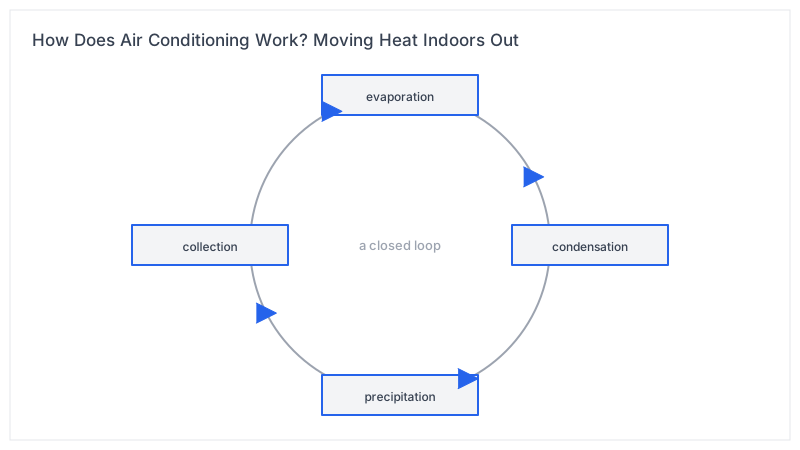
It uses the same refrigerant loop as a refrigerator: evaporate inside to soak up heat, condense outside to dump it.
As a bonus it pulls moisture from the air, which is why cooled rooms also feel less humid.
2. What It Means
Inside the unit, the cold coil evaporates the refrigerant and absorbs heat from room air blown across it.
Outside, the compressor raises pressure so the refrigerant condenses and releases that heat to the open air through the hot coil.
3. Why It Happens
The loop moves heat against its natural flow, from cool inside to warm outside, which is why it needs power to run the pump.
Cooling the air below its dew point drops water out of it, so the dripping pipe is the humidity leaving the room.
A filter catches dust on the way, which is why clean filters keep both air and efficiency healthy.
4. Real Examples
The warm air from the outdoor unit is the heat pumped out of your living room, the whole point made visible.
A car’s AC works the same way with a smaller loop driven by the engine, cooling the cabin on a drive.
Setting it a few degrees higher eases the load, because a smaller gap between inside and outside needs less pumping.
5. How It Affects Us
Cooling made hot cities livable and protects medicine and food that must stay chilled.
It uses significant power, so smarter use and cleaner grids matter for cost and climate.
Pairing it with shade and airflow often cools comfort more than the unit alone.
6. Key Takeaways
- An AC pumps heat from inside to outside using a refrigerant loop like a fridge’s.
- It also dries the air as a side effect of cooling below the dew point.
- The unit needs power to move heat the wrong way, so setting and shade affect its load.