1. Quick Summary
An eclipse is when the Sun, Moon, and Earth line up so one blocks the light of another.
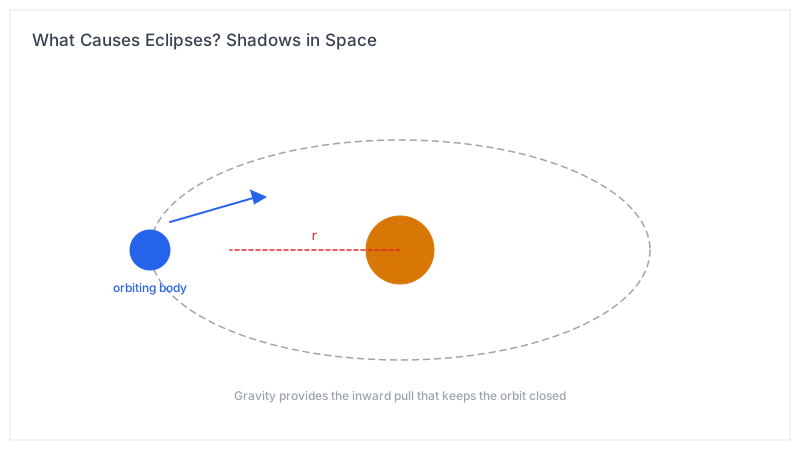
In a solar eclipse the Moon passes between the Sun and Earth, casting a small shadow on our day.
In a lunar eclipse the Earth sits between the Sun and Moon, and Earth’s shadow falls across the full Moon.
2. What It Means
Solar means the Sun is hidden, so the Moon’s shadow races across a strip of Earth and day briefly darkens there.
Lunar means the Moon is hidden, as it moves into the reddish shadow Earth casts into space, often tinting it copper.
3. Why It Happens
Alignment is rare because the Moon’s orbit is tilted, so most months it passes above or below the line and no eclipse occurs.
Size and distance match neatly: the Sun is far bigger but much farther, so the Moon can just cover its disk from our view.
The curved shadow Earth casts on the Moon during a lunar eclipse was early proof that Earth is round.
4. Real Examples
A total solar eclipse turns day to twilight for minutes and reveals the Sun’s faint outer glow, the corona.
A blood-red Moon during a lunar eclipse comes from sunlight bent through Earth’s atmosphere, like every sunset projected.
Because the Moon’s shadow is narrow, a given spot sees a total solar eclipse only every few centuries on average.
5. How It Affects Us
Eclipses let scientists study the Sun’s edge and test ideas about light and gravity during the brief darkness.
They were once feared as omens but are now predictable to the second, a win for understanding the sky.
Safe viewing matters, since looking at the Sun’s disk can burn the eye even when partly covered.
6. Key Takeaways
- Eclipses are shadows cast when the Sun, Moon, and Earth line up.
- Solar: Moon blocks Sun; lunar: Earth blocks Sun from Moon.
- Their rarity comes from the tilt of the Moon’s orbit, not chance alone.