1. Quick Summary
A refrigerator keeps food cold by moving heat from its inside to the warmer room around it.
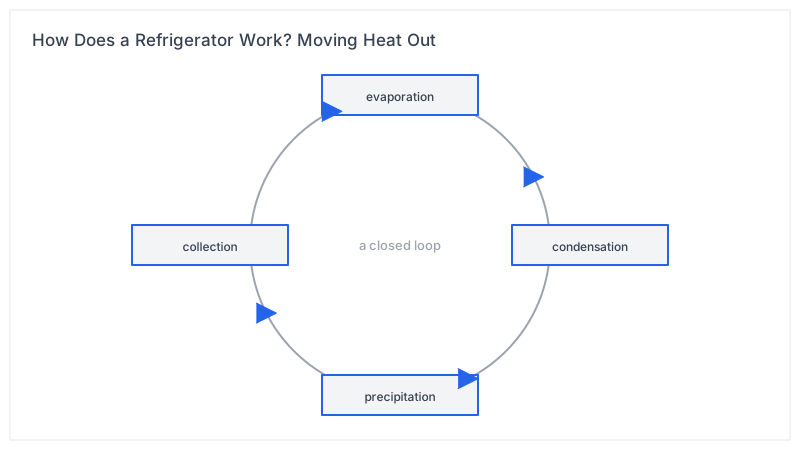
It uses a sealed fluid, called a refrigerant, that absorbs heat as it evaporates and dumps heat as it condenses.
A compressor drives that fluid around a loop, so the same heat is carried out again and again.
2. What It Means
Evaporation cools because a liquid turning to gas pulls energy from its surroundings; that is the chill you feel when water dries off your skin.
The fridge exploits this by letting the refrigerant evaporate inside the box to soak up heat, then condense outside to release it.
3. Why It Happens
The compressor squeezes the gas to raise its pressure and temperature, pushing it to the coils at the back where it can shed heat to the room.
A valve then drops the pressure so the fluid cools sharply and evaporates in the inner coils, ready to absorb more heat.
Insulation keeps the cold in, so the loop only needs to fight the slow leak of warmth through the walls.
4. Real Examples
The warm coils behind a fridge are the heat it pumped out of your food, not a fault but the whole point.
An air conditioner is the same idea aimed at a room, moving indoor heat outdoors through a larger loop.
Opening the door often forces the loop to work harder, which is why a full, closed fridge stays efficient.
5. How It Affects Us
Refrigeration changed food storage, cutting spoilage and widening the foods a household can keep.
It underpins medicine too, from vaccines to lab samples that must stay cold.
Because the loop runs on power and fluids, efficiency and proper sealing matter for both bills and the planet.
6. Key Takeaways
- A fridge moves heat out using a fluid that evaporates inside and condenses outside.
- The compressor and a pressure drop drive that cycle continuously.
- It does not create cold; it relocates heat from the box to the room.