1. Quick Summary
DNA is a long molecule inside cells that carries the instructions for how a living thing is built and works.
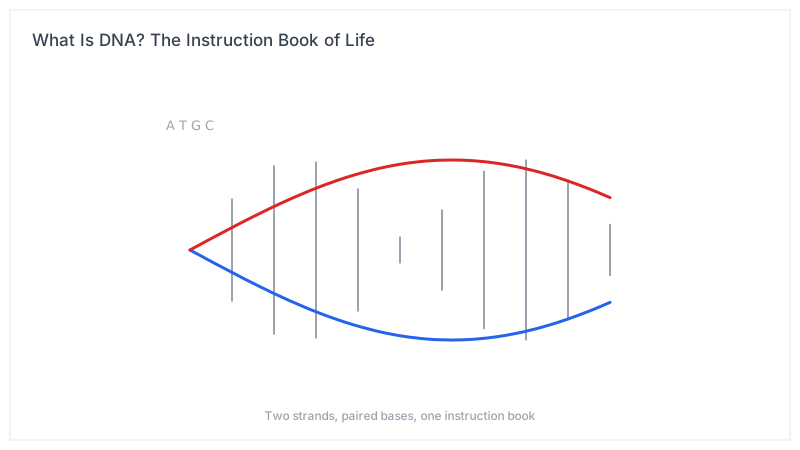
Its famous shape is a twisted ladder, and the rungs are letters that spell out genes, the units of inherited trait.
When cells divide, DNA is copied so each new cell gets the same instruction book.
2. What It Means
The letters are four chemicals paired in a set order; the sequence is the code that tells the cell which proteins to make.
Proteins do most of the work in the body, so the DNA code indirectly shapes everything from eye color to enzyme speed.
3. Why It Happens
Copying matters because life grows by cells dividing, and an accurate copy keeps traits steady across generations.
Small changes, or mutations, in the code can alter a trait, and over long time those changes drive variation and evolution.
You inherit half your DNA from each parent, which is why children share features of both yet are not identical copies.
4. Real Examples
A single gene difference can change flower color in a plant or fur pattern in an animal, a visible result of the code.
DNA evidence compares these unique patterns to link a person to a sample, a common forensic tool.
Identical twins start from the same early code, yet life’s edits make them differ slightly over time.
5. How It Affects Us
DNA explains both why living things resemble their parents and how species change across ages.
Reading it has transformed medicine, letting doctors predict risks and tailor treatments to a person’s code.
Because the same molecule runs through nearly all life, it hints at a shared origin for the living world.
6. Key Takeaways
- DNA is the molecule that stores the instruction code for building living things.
- Its letter sequence spells genes that guide protein-making and traits.
- It is copied at cell division and inherited, linking generations and enabling evolution.