1. Quick Summary
Plants are makers: they build sugar from carbon dioxide in the air and water from the soil, powered by sunlight.
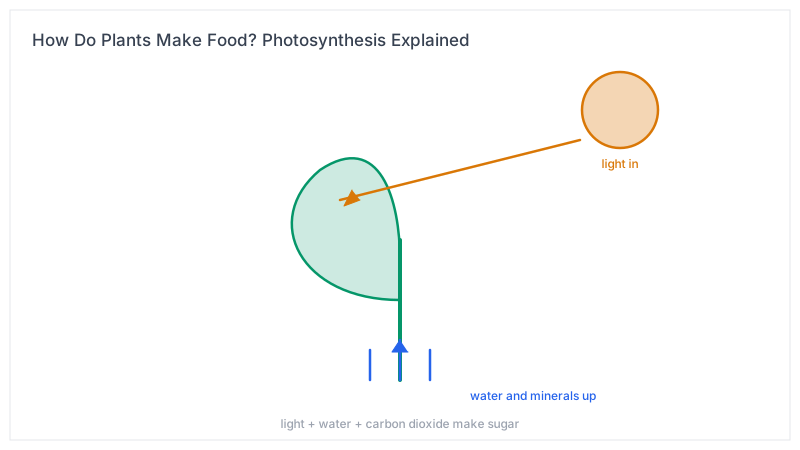
This process is called photosynthesis, and it happens mostly in the green parts of the plant, especially the leaves.
As a bonus, it releases oxygen, the gas almost all animals need to live.
2. What It Means
Green pigment called chlorophyll catches light energy and uses it to stitch simple molecules into sugar, the plant’s food.
The raw materials enter from two sides: carbon dioxide comes in through tiny leaf pores, while water travels up from the roots.
3. Why It Happens
Light is the battery: without it the chemical assembly cannot run, which is why plants grow toward the sun and slow down in darkness.
Water split during the process supplies the needed hydrogen and releases oxygen as a left-over, the source of most atmospheric oxygen.
Sugar is then spent for energy or built into wood, leaves, and fruit, so the plant can grow and reproduce.
4. Real Examples
A leafy houseplant cleans a little indoor air while it feeds itself, a small daily show of photosynthesis.
Crops turn sunlight into the calories we eat, which is why sunlight and rain map so closely to where food grows.
At night, plants mostly pause making food and respire like us, using some of the sugar they stored by day.
5. How It Affects Us
Photosynthesis is the base of nearly all food chains; animals eat plants or eat animals that ate plants.
It pulls carbon dioxide from the air and stores carbon in roots and wood, a quiet brake on climate change.
Forests and oceans of tiny plants together supply much of the oxygen that keeps animals alive.
6. Key Takeaways
- Plants make sugar from light, water, and carbon dioxide through photosynthesis.
- Chlorophyll captures the light, and oxygen is released as a by-product.
- This process feeds almost all life and refreshes the air we breathe.