1. Quick Summary
The internet is a giant web of connected computers and cables that lets devices anywhere exchange information.
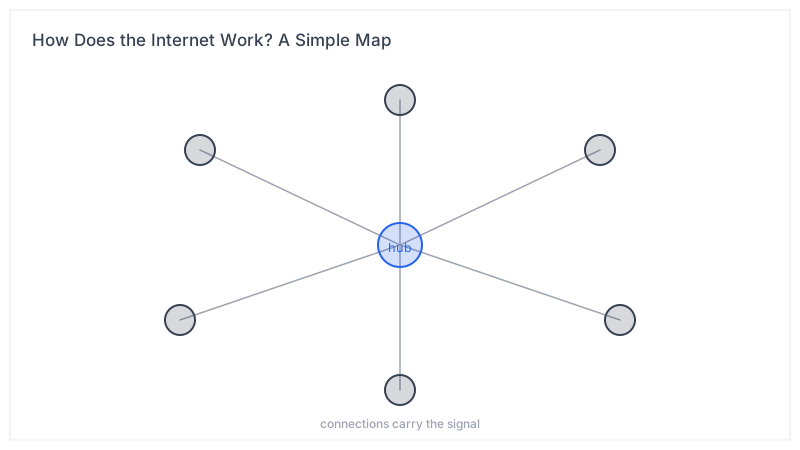
Your message is split into small packets, each tagged with a destination address, then sent along the fastest available path.
Routers are the traffic directors that read those addresses and forward each packet toward its goal.
2. What It Means
Every device on the internet has a numeric address, like a postal code, so packets know where to go and where to return.
Protocols are the shared rules, such as how to start a connection and how to check for errors, so different machines can cooperate.
3. Why It Happens
Splitting data into packets lets many conversations share the same wires at once, like cars using one road without colliding.
If one path is busy or broken, routers reroute packets another way, which is why the network keeps working through local failures.
Servers are always-on computers that store websites and answer requests, so your browser can fetch a page from across the world.
4. Real Examples
Loading a video pulls thousands of packets per second from a server and reassembles them in order on your screen.
A message to a friend overseas may cross undersea cables and several countries in a fraction of a second.
DNS acts like a phone book, turning a name like scienceexplain.site into the numeric address computers use.
5. How It Affects Us
The internet moved knowledge, commerce, and communication from local to global, available from a pocket device.
Because it was built to route around damage, it is unusually resilient compared with a single central system.
That same openness means security, like encryption and careful links, is now part of everyday use.
6. Key Takeaways
- The internet connects devices worldwide and moves data as addressed packets.
- Routers direct packets, and protocols let different machines speak the same language.
- Servers store and serve the pages and files we request every day.