1. Quick Summary
Eyes work by collecting light and converting it into nerve signals that the brain interprets as pictures.
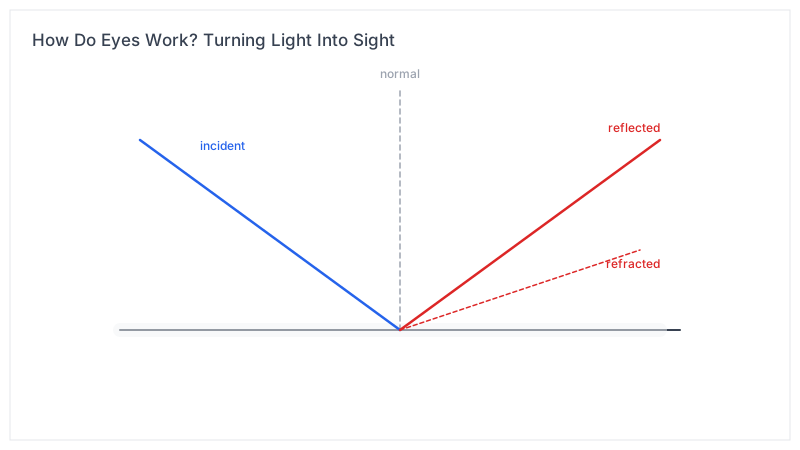
Light enters through a clear window, is focused by a lens, and lands on a light-sensitive layer at the back called the retina.
The retina sends the pattern along the optic nerve to the brain, which builds the image you actually see.
2. What It Means
The cornea and lens together bend light so that distant and near objects land sharply on the retina, like a camera focusing on film.
Tiny cells called cones read color and fine detail in bright light, while rods handle dim light and motion, which is why colors fade at night.
3. Why It Happens
The lens changes shape to focus on near or far things, a flexibility that lets you read a book then glance at a mountain.
The brain flips and stitches the signals, because the image lands upside down on the retina and arrives as two slightly different views it merges into depth.
Pupils widen in dim light to catch more photons and narrow in bright light to protect the sensor, an automatic exposure control.
4. Real Examples
Reading in low light tires the eye because rods work harder and the lens strains to focus, though it does not cause permanent damage.
A camera and an eye are alike: both use a lens, an aperture, and a sensor, but the eye’s sensor talks straight to the brain.
Optical illusions reveal how much of seeing is the brain’s interpretation, not just the light that entered.
5. How It Affects Us
Vision is how most people learn about the world, so eye health shapes learning, safety, and independence.
Small changes like screen breaks and checkups protect the lens and retina over a long life.
Understanding the eye helps design better glasses, cameras, and even artificial retinas for those who lose sight.
6. Key Takeaways
- Eyes focus light onto the retina, which converts it to nerve signals for the brain.
- Cones handle color and detail; rods handle dim light and motion.
- Much of seeing is the brain interpreting signals, not just light entering the eye.